Monday, December 9, 2013


NEW ORLEANS

We just spent three days in New Orleans.  Interestingly, I only had one meal of beignets and chicory coffee in the French Quarter.  The other meals were around other areas in New Orleans.

We ate at Willie Mae's, Coquette, Commander's Palace, and August.  Willie Mae's is in one of the oldest African American neighborhoods in the country.  We went for fried chicken.  


Wednesday, December 4, 2013


LINCOLN CENTER

Metropolitan Opera
Rigoletto - Verdi

Premiere: Teatro la Fenice, Venice, 1851


"Rigoletto is a journey of undeniable force that commands the respect of critics, performers, and audiences alike. It was immensely popular from its premiere—from even before its premiere, if we credit accounts of the buzz that surrounded the initial rehearsals—and remains fresh and powerful to this day. The story is one of the most accessible in opera, based on a controversial Victor Hugo play whose full dramatic implications only became apparent when transformed by Verdi’s musical genius. Rigoletto is the tale of an outsider—a hunchbacked jester—who struggles to balance the dueling elements of beauty and evil that exist in his life. Written during the most fertile period of Verdi’s remarkable career, the opera resonates with a universality that is frequently called Shakespearean.

Rigoletto contains a wealth of melody, including one that is among the world’s most famous: “La donna รจ mobile.” The opera’s super-familiar arias—“Questa o quella” and “Caro nome,” for example—are also rich with character insight and dramatic development. The heart of the score, though, lies in its fast-moving subtleties and apt dramatic touches. The baritone’s solos, “Pari siamo!” (Act I, Scene 2) and “Cortigiani, vil razza dannata” (Act II), are epic scenes telescoped to less than four minutes each. Not even Wagner’s great monologues cover more territory than these, and certainly not within Verdi’s economy of means. The celebrated father–daughter duets also reflect Verdi’s overall design. Rigoletto sings of his protective love for Gilda in Act I, Scene 2 in a spun-out phrase of simple, honest melody, while her music decorates his. In their subsequent scene in Act II, Gilda’s music (and, by implication, her life) is similarly intertwined with that of Rigoletto, until finally her melody breaks away as she strives to declare her adolescent independence. The famous quartet “Bella figlia dell’amore” (Act III) is an ingenious musical analysis of the diverging reactions of four characters in the same moment: the Duke’s music rises with urgency and impatience, Gilda’s droops with disappointment, Rigoletto’s remains measured and paternal, while the promiscuous Maddalena is literally all over the place. In the context of the opera, the merely lovely music becomes inspired drama.


Dmitri Hvorostovsky sings the title role of Verdi’s tragic masterpiece for the first time at the Met in Michael Mayer’s dazzling production set in Las Vegas—the neon-bedecked hit of the 2012–13 season. Matthew Polenzani is the womanizing Duke, and Irina Lungu and Sonya Yoncheva, both in their Met debuts, sing Gilda."


Wednesday, November 27, 2013


THANKSGIVING

We are driving up and into the Catskill Mountains for 5 days.  We will be with the Godici family at their house in Claryville.

Lots of food and lots of family!


We walked up the hill to find and check our "Memory Rocks."  We stacked them together in an out of the way site.
The girls, Carolyn, and I stacked these rocks a while back.


Tulips from Roxy, Jere, and Ted in Los Angeles.


Tuesday, November 26, 2013


LINCOLN CENTER

Avery Fisher Hall
New York Philharmonic

Mozart - Symphony No. 39
Mozart - Symphony No. 41, Jupiter
Britten - Serenade for Tenor, Horn, and Strings

We recently heard the Britten piece but thoroughly enjoyed it and look forward to hearing it again.

A cold, dark, rainy night in New York City.  Good for music.

https://www.youtube.com/watch?v=PQ0ITqRBaE0


Sunday, November 24, 2013


THEATER

Polonsky Shakespeare Center
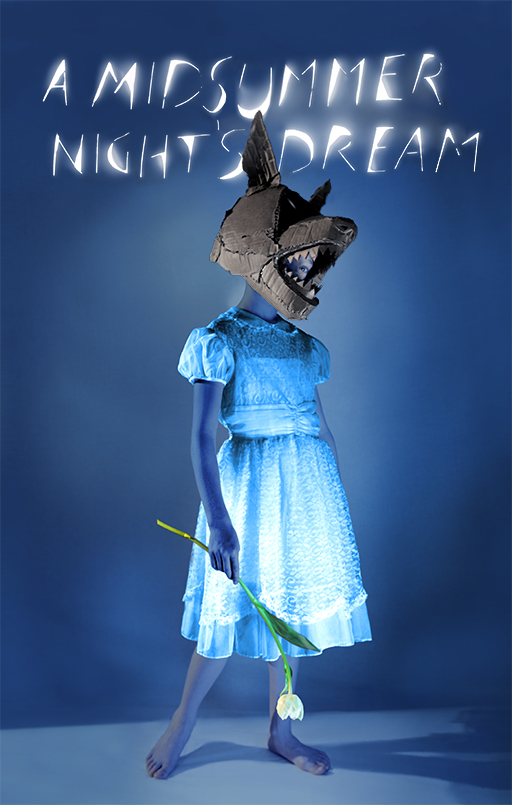
Midsummers Night's Dream


I'M LEAVING THE BLOG BUT WE DIDN'T SEE THE SHOW.  We are now rescheduled for January 2nd, 2014.

The theater is in its first year and it's a technical wonder, black-box theater.  We really looked forward to the show because of the director and the wonderful work she did with The Lion King.

At 2:16 a representative of the theater came on stage and told us that the play was cancelled that day for medical reasons.  As we left, an EMS vehicle was in front of the theater.


For those who have seen the creativity of The Lion King, seeing a Shakespeare play by the same creator sounds enticing.

“The director who redefined spectacle on Broadway… has now given New York a Midsummer Night’s Dream that doesn’t so much reach for the heavens as roll around in them, with joyous but calculated abandon… For Ms. Taymor, the sky is not the limit. It’s a supple canvas to be stretched and bent to the whims of the imagination. Her eye-popping take on the canon’s most enchanted comedy… confirms Ms. Taymor’s reputation as the cosmic P. T. Barnum of contemporary stagecraft… This Dream exists… as a glittering necklace of breathtaking moments… [and] when the moments are this beautiful, they take root in your mind and assume lives of their own. Don’t be surprised when they start showing up in your own dreams. The ingeniously mixed music of Elliot Goldenthal ranges from anxious jazz riffs to sustained, ethereal lullabies.” – Ben Brantley, The New York Times
“FIVE STARS. Visionary director Julie Taymor is a thrilling painter of theater…she sprinkles each scene with creative fairy dust. You’d be hard pressed to find [a production] that rivals Taymor’s for beauty.” – Adam Feldman, Time Out New York
“A deliriously beautiful, deeply magical staging that’s as human as it is wildly inventive.” - Linda Winer, Newsday
MIDSUMMER-art-website
A MIDSUMMER NIGHT’S DREAM
By William Shakespeare
Music: Elliot GoldenthalDirection: Julie Taymor
OCTOBER 19, 2013 – JANUARY 12, 2014
Julie Taymor, Tony Award winner for direction of The Lion King, is an artist internationally acclaimed for her bold and original imagination. For our inaugural production, she stages Shakespeare’s joyous comedy about the universal theme of love and its complications: lust, disappointment, confusion, marriage.A Midsummer Night’s Dream brilliantly conjoins four intertwined stories: the marriage of the Athenian Duke Theseus to the Amazon queen Hippolyta; the warring Oberon and Titania, king and queen of the fairies; the madcap follies of four lovers in a forest; and the comically earnest efforts of a group of working men to stage a love-play for the royal wedding. Lysander loves Hermia, whose father wants her to marry Demetrius. Helena loves Demetrius, who chases the eloping Lysander and Hermia into the woods, pursued by Helena. They are all fair game for mischievous Puck, Oberon’s servant, who scrambles their desires and Titania’s. As the working men press faithfully on with their rehearsals, the otherworldly night of confusion, passion and diligence proves oddly momentous, touching every life to the quick.Taymor’s vision will be a fantasia of light and shadow. The stage will breathe with the miraculous charms and powerful illusions of love.
To read critical acclaim for A Midsummer Night’s Dream, please click here. 
—

Leadership support for this production is provided by The Polonsky Foundation.

This production is sponsored by American Express.
Additional support provided by Hudson Scenic Studio, WorldStage, and Rolex Mentors & Protegรฉs.

—
Julie-TFANA-brochure-photo
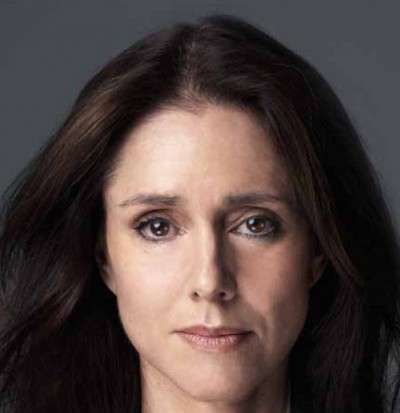
Julie Taymor is the first woman to win the Tony Award® for Best Direction of a Musical, as well as a Tony for Best Costumes, for her production of The Lion King. She has directed four major films: Titus,Frida, Across the Universe and most recently, The Tempest. Her opera stagings include Elliot Goldenthal’s Grendel and, for the Metropolitan Opera, Die Zauberflรถte. At TFANA, she has directed Shakespeare’s The Tempest, The Taming of the Shrew, Titus Andronicus and Carlo Gozzi’sThe Green Bird.*Member of Actors’ Equity Association, the union of professional actors and stage managers in the United StatesPoster Design: Julie Taymor | Photograph: Josef Astor | Graphic Design: Milton Glaser, Inc.Pictured above: Julie Taymor, photo by Marco Grob.


Saturday, November 23, 2013


THEATER

New Victory theater
Feet Don't Fail Me Now!

We're taking two of our granddaughters, 6 and 7 years of age.

Feet Don't Fail Me Now

A Minnesota troupe of musicians and dancers lights up the New Victory stage.

           
The band and dancers of Feet Don't Fail Me Now.
(© The New Victory Theater)
"I should have learned to tap-dance." That's what you might find yourself thinking while watching Feet Don't Fail Me Now, the heart-pounding music-and-dance show running at the New Victory Theater. Kids, on the other hand, will likely beg parents for a pair of tap shoes.

The aptly named Rhythmic Circus, a troupe of talented hoofers from Minnesota, has paired up with seven-piece band Root City and the "human beatbox" Aaron "Heatbox" Heaton. Together they put on an exuberant, toe-tapping, hand-clapping hour of music and dance that adults will enjoy as much as kids.

The program comprises 14 numbers that jauntily bounce from bluesy guitar riffs at the beginning of "Dream Song" to the intoxicating Latin beat of "Salsa." Most of Root City's songs are accompanied by Rhythmic Circus' tap dancing, while "Heatbox" takes part in a little bit of everything, in addition to his own acts.

All of the pieces are unique and exciting, but a few stand out. Heatbox's solos are two of them. His performances — which involve mimicking the sounds of everything from a DJ scratching to the instruments of an orchestra, then sampling them all to create intricate, multi-voice songs — have to be experienced to be believed.
Also among the audience favorites is "Study Hall," a frenetic and fun example of percussive music using nothing but chairs and hands. The "Salsa" number features some of the wildest, most impressive tapping you're likely to see anywhere. And the title piece, "Feet Don't Feel Me Now," which bookends the show, combines the talents of the band, the dancers, and Heatbox with exhilarating, feel-good lyrics that bring you to your feet.

Though music and sound naturally play a part in the show, the visually compelling numbers, accentuated by Mark Ruark's stylized lighting, will delight deaf and hearing-impaired kids too. The eye-catching performances, colorful and frequently changed costumes, and silly shenanigans fill the stage with an irresistible, palpable energy.

For the final number, the band and the dancers ask everyone in the audience to get up, clap their hands, and dance. When it was all over, a young lady, who looked about 10 years old, stood applauding next to me and cried out, "That was the best show ever!" I have to say, it's right up there.

Thursday, November 21, 2013


LINCOLN CENTER

New York Philharmonic
Benjamin Britten

Serenade for Tenor, Horn, and Strings
Spring Symphony

http://www.youtube.com/watch?feature=player_embedded&v=5RYBOPVc3ms

Today is a New York Philharmonic day!  We attended the rehearsal this morning and then the performance this evening.  Lots of music!

Regarding the rehearsal… The afternoon before the performance, yesterday at 4:30 PM, the tenor notified the Philharmonic that he would not be able to sing.  This morning, one hour prior to rehearsal, two tenors were acquired to sing the tenor roles.

That means… This rehearsal became a bit more of a rehearsal than that for the Beethoven's Ninth. 

The French Horn solos, valveless and valved, are played by the principal horn player of the Philharmonic.  He has been the principal horn player with the Philharmonic since 1980.  Let me say, he was spectacular. 

Philip Myers joined the Philharmonic as Principal French Horn (The Ruth F. and Alan J. Broder Chair) in January 1980, and made his solo debut with the Orchestra that month in the premiere of William Schuman’s Three Colloquies for French Horn and Orchestra. He has since appeared as a Philharmonic soloist often, most recently performing Mozart’s Horn Concerto No. 2, conducted by Lorin Maazel, in New York in January 2008 and again in February 2008 in Kaohsiung, Taiwan, and Shanghai, China. Mr. Myers began his orchestral career in 1971 with a three-year term as principal horn of the Atlantic Symphony in Halifax, Nova Scotia. He was third horn with the Pittsburgh Symphony from 1974 until 1977. As principal horn of the Minnesota Orchestra for a season and a half, he made a solo debut with that ensemble in 1979, performing Richard Strauss’s Horn Concerto No. 1, Sir Neville Marriner conducting. A native of Elkhart, Indiana, Mr. Myers holds two degrees from Carnegie–Mellon University in Pittsburgh. He plays Engelbert Schmid French horns.

http://www.nytimes.com/2013/11/23/arts/music/new-york-philharmonic-presents-a-britten-program.html?_r=0