Wednesday, January 15, 2014


THEATER

Booth Theater
The Glass Menagerie - Tennessee Williams

Below is a review from the New York Theater Guide.

"There are productions by which you can mark a moment in your life – the way you would treasure and recall an encounter with a loved one. This production will be that for anyone lucky enough to see it.

Although some will single out Cherry Jones as Amanda, I will not. So beautifully crafted is this production that there are no seams between any of the elements. The writing becomes three-dimensional. The actors disappear into the story. The visual elements entwine – the actors’ choreographed movements, the extraordinary set, lights, costumes and even music. This is one enormous chunk of life that will not be separated into parts.

As well, I believe, Mr. Tiffany understands that the center of this piece is Laura (Celia Keenan-Bolger). Not Tom (Zachary Quinto) or Amanda. Laura is the one around whom every character orbits. Her choice to stay locked in her life seems as though it is out of her control, but she holds her own against all comers, including her mother and her brother. On the other hand, when life hands her an offer of love, she makes a place for it on her dance card. Hers is an extraordinary spirit, and I have never seen it more apparent than in this production.

That this is so is a result of THE scene. You know the one. Where Laura spends time alone with Jim O’Connor, The Gentleman Caller (Brian J. Smith) who opens a doorway to a new life and then leaves her at the threshold hoping she will step through without him. It is a scene so intimate, tender and deep that the audience is lifted out of the theatre directly into Tennessee Williams Land. It is breathtaking.

Flanking both sides of this scene are extraordinary exchanges. Cherry Jones, although off to a confusing start with her opening reminiscences thrives in the long stretch. She is a big woman in voice and gesture who makes it clear that this Amanda is living a small life. Amanda bumps up against the ceilings and walls like Alice in Wonderland and appears surprised each time the facts loom up to greet her. The past as she knew it does not die – and her son is an acorn that falls not far from this tree – it is her own custom designed Gentleman Caller. Jones drifts in and out of this courtship with heartbreaking simplicity. A breaking heart needs no embroidery, and Jones lays hers on her sleeve for us to see and feel.

Zachary Quinto as Tom takes himself very seriously in his monologues but lightens up considerably in his scenes with Jones to the point where the two mine humor in their scenes that I have never seen before. They vacillate between rage and camaraderie because they are so close it pains them both.

These scenes are gorgeous. As the Gentleman Caller, Smith arrives toting a Missouri accent strong enough to dance on, but he lets go of it soon enough so that THE scene becomes a pas de deux of extraordinary depth. The fact that high school has been the highlight of O’Connor’s life nips at his heels. His path is set and the future will be worth the effort, even if it means that he may settle for a love that is on the conventional side. Crossing paths with Laura throws him and his tender soul off kilter, and in righting his trajectory he breaks more than one heart in that theatre.

Which brings us to Keenan-Bolger. Hers is a Laura that is like a still pond covered with tiny sparking lights. This Laura is not a victim, even if she thinks she is. Her spirit keeps chugging like the heartbeat of a hawk. She may look as if she is idly riding an airstream, but this woman is forever watching for movement of any sort. This Laura puts the world on notice. She is watching. She is quiet, she is still, and she is here.

This is why Laura is the one thing that Tom cannot leave behind. He may be his mother’s twin, but it is the heartbeat of his sister that is the music to which he dances.

Get to this brilliant, brilliant production. Just do it."

Tuesday, January 14, 2014


MUSEUMS

Metropolitan Musem of Art

The Frick
Vermeer, Rembrandt, and Hals: Masterpieces of Dutch Painting from the Mauritshuis
 
 
The Frick Collection is the final American venue of a global tour of paintings from the Royal Picture Gallery Mauritshuis in The Hague, the Netherlands. While the prestigious Dutch museum undergoes an extensive two-year renovation, it is lending masterpieces that have not traveled in nearly thirty years. At the Frick, a selection of fifteen paintings includes the beloved Girl with a Pearl Earring (c. 1665) by Johannes Vermeer and Carel Fabritius’s exquisite Goldfinch (1654). The exhibition continues the Frick’s tradition of presenting masterpieces from acclaimed museums not easily accessible to the New York public.
Girl with a Pearl Earring is the sole work on view in the Oval Room, with the other paintings shown together in the East Gallery. To accompany the exhibition, three works by Vermeer in the permanent collection, Officer and Laughing Girl (c. 1657), Girl Interrupted at Her Music (c. 1658–59), and Mistress and Maid (c. 1666–67), are grouped together in the West Gallery, where they can be viewed along with complementary Frick Collection paintings by the represented artists.
The fifteen carefully chosen highlights from the Mauritshuis — portraits, landscapes, genre scenes, and still lifes — demonstrate the themes that stirred artists’ and collectors’ imaginations during the Dutch Golden Age. In addition to Girl with a Pearl Earring and The Goldfinch, these include Rembrandt’s Simeon’s Song of Praise (1631), “Tronie” of a Man with a Feathered Beret (c. 1635), Susanna (1636), and Portrait of an Elderly Man (1667); Frans Hals’s pendant portraits Jacob Olycan (1596–1638) and Aletta Hanemans (1606–1653), both painted in 1625; Pieter Claesz’s Vanitas Still Life (1630); Nicholas Maes’s Old Lacemaker (c. 1655); Gerard ter Borch’s Woman Writing a Letter (c. 1655); Jan Steen’s Girl Eating Oysters (c. 1658–60) and “As the Old Sing, So Pipe the Young” (c. 1665); Jacob van Ruisdael’s View of Haarlem with Bleaching Grounds (c. 1670–75); and Adriaen Coorte’s Still Life with Five Apricots (1704).


Monday, January 13, 2014


THEATER

Murder For Two
New World Stages

Officer Marcus Moscowicz is a small town policeman with dreams of making it to detective. One fateful night, shots ring out at the surprise birthday party of Great American Novelist Arthur Whitney and the writer is killed…fatally. With the nearest detective an hour away, Marcus jumps at the chance to prove his sleuthing skills—with the help of his silent partner, Lou.  But whodunit?  Did Dahlia Whitney, Arthur’s scene-stealing wife, give him a big finish?  Is Barrette Lewis, the prima ballerina, the prime suspect?  Did Dr. Griff, the overly-friendly psychiatrist, make a frenemy?   Marcus has only a short amount of time to find the killer and make his name before the real detective arrives…and the ice cream melts!
MURDER FOR TWO is the perfect blend of music, mayhem and murder!  In this hilarious 90-minute show, 2 performers play 13 roles—not to mention the piano—in a witty and winking homage to old-fashioned murder mysteries.    The New York Times calls it “INGENIOUS!  A snazzy double-act that spins out a comic mystery animated by funny, deftly turned songs.”  You won’t want to miss this killer musical comedy!

Tuesday, January 7, 2014


THEATER

Twelfe Night & Richard III
Mark Rylance

Below is a short article about Mark Rylance.  Previous blogs discussed the evenings we saw the two plays.


Mark Rylance, routinely described, at 53, as the greatest English theater actor of his generation, is the galvanizing, unmissable actor other actors flock to see. What a treat we have in store! The two-time Tony Award winner is starring on Broadway in the Shakespeare’s Globe productions of Twelfth Night and Richard III (opening in repertory at the Belasco, November 10).
 
Rylance’s Tony-winning performances revealed his astonishing virtuosity. In 2008 he turned a failed retro farce, Boeing-Boeing, into a hit with his hapless innocent, Robert from Wisconsin: a quiet riot in the spirit of Buster Keaton. In 2011 he was Johnny “Rooster” Byron, the mesmerizing wild gypsy in Jez Butterworth’s state-of-England drama, Jerusalem.
In Richard III, he even dares to make the hunchbacked king—history’s gleeful psychopath and “shadow in the sun”—surprisingly funny. (Until he freezes our laughter.) Why, I asked him, do we relish Richard’s monstrous nature so much? “Because we are all capable of monstrosity?” he suggested.
A gentle eccentric offstage, Rylance was the first artistic director of the Globe, on London’s South Bank (1995–2005), and he returned the company to its Shakespearean tradition of casting males as women. What’s the difference, I asked, between playing a woman and a man? “Sex,” he replied.
He plays the lovesick Lady Olivia in Twelfth Night. No problem! He’s already played Cleopatra.

Monday, January 6, 2014


SUNSET ON COLDEST NIGHT

This evening the temperature is going to drop until tomorrow during which the high will be 12 degrees.

I looked out our window and noticed how bright and clear the air was and thought I'd share it with you. The first picture is what caught my attention.  The second picture is a video of the lights in the top of the Chrysler Building and then the Empire State Building coming on.  The third picture is with the lights barely showing as twilight descends.


Saturday, January 4, 2014


THEATER

Belasco Theater
Richard III - Shakespeare

Somewhere I read that there are 17 Shakespeare productions being performed in New York City this season.  That doesn't count the derivatives of his plays found in presentations such as ballet. The 17 are only dramatic play performances.

Of the several Shakespeare plays we've already attended, they've all been sold out for every performance.  We already have tickets to Macbeth that will be performed this coming June in the massive Park Avenue Armory.

Please, open the links below.


Point being… Shakespeare can still sell-out a house with people paying significant money to see and enjoy his plays.  All of these 17 plays are a commercial venture that must carry themselves economically through the merit and attraction of the plays.

The Richard III we are seeing is by an all male cast (as the plays were originally performed).  The troupe doing Richard III is the same that performed Twelfe Night.  They are in New York from The Globe Theatre in England alternating performances between the two plays.  Their goal is to produce an authentic, period performance.


Thursday, January 2, 2014


BROOKLYN ACADEMY OF MUSIC

Polonsky Shakespeare Theater
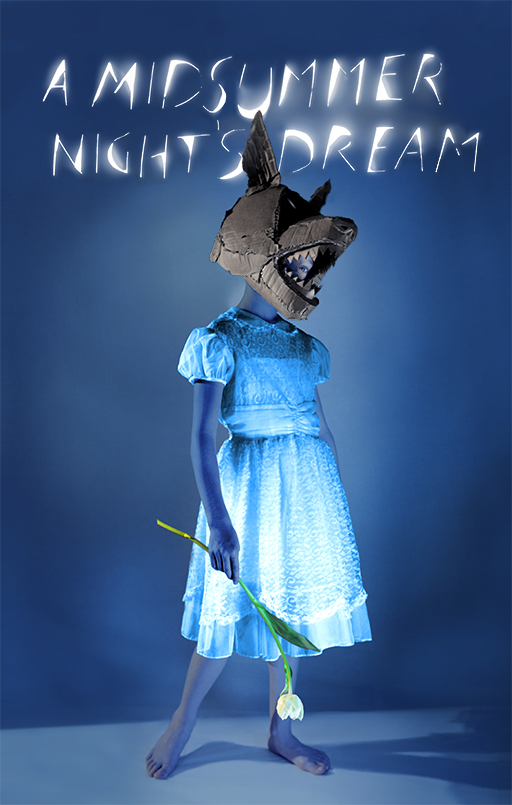
Midsummer Night's Dream - Shakespeare

The weather is cold, a severe winter storm is approaching, and we're riding the subway to Brooklyn to see a play!

This is a new, state of the art venue.  Julie Taymor is the director.  It should be really good.

For those who have seen the creativity of The Lion King, seeing a Shakespeare play by the same creator sounds enticing.  Taymor also did the spectacular work for The Magic Flute that we just saw at the Metropolitan Opera.  Her work is special.

New York can do what no other city in the world can do It combines the talents of Broadway with opera and Shakespeare.  A good result happens.

Please, Google images for "Taymor Puppets."

Below are copies of articles about Taymore and this show.


“The director who redefined spectacle on Broadway… has now given New York a Midsummer Night’s Dream that doesn’t so much reach for the heavens as roll around in them, with joyous but calculated abandon… For Ms. Taymor, the sky is not the limit. It’s a supple canvas to be stretched and bent to the whims of the imagination. Her eye-popping take on the canon’s most enchanted comedy… confirms Ms. Taymor’s reputation as the cosmic P. T. Barnum of contemporary stagecraft… This Dream exists… as a glittering necklace of breathtaking moments… [and] when the moments are this beautiful, they take root in your mind and assume lives of their own. Don’t be surprised when they start showing up in your own dreams. The ingeniously mixed music of Elliot Goldenthal ranges from anxious jazz riffs to sustained, ethereal lullabies.” – Ben Brantley, The New York Times
“FIVE STARS. Visionary director Julie Taymor is a thrilling painter of theater…she sprinkles each scene with creative fairy dust. You’d be hard pressed to find [a production] that rivals Taymor’s for beauty.” – Adam Feldman, Time Out New York
“A deliriously beautiful, deeply magical staging that’s as human as it is wildly inventive.” - Linda Winer, Newsday
MIDSUMMER-art-website
A MIDSUMMER NIGHT’S DREAM
By William Shakespeare
Music: Elliot Goldenthal
Direction: Julie Taymor
OCTOBER 19, 2013 – JANUARY 12, 2014
Julie Taymor, Tony Award winner for direction of The Lion King, is an artist internationally acclaimed for her bold and original imagination. For our inaugural production, she stages Shakespeare’s joyous comedy about the universal theme of love and its complications: lust, disappointment, confusion, marriage.A Midsummer Night’s Dream brilliantly conjoins four intertwined stories: the marriage of the Athenian Duke Theseus to the Amazon queen Hippolyta; the warring Oberon and Titania, king and queen of the fairies; the madcap follies of four lovers in a forest; and the comically earnest efforts of a group of working men to stage a love-play for the royal wedding. Lysander loves Hermia, whose father wants her to marry Demetrius. Helena loves Demetrius, who chases the eloping Lysander and Hermia into the woods, pursued by Helena. They are all fair game for mischievous Puck, Oberon’s servant, who scrambles their desires and Titania’s. As the working men press faithfully on with their rehearsals, the otherworldly night of confusion, passion and diligence proves oddly momentous, touching every life to the quick.Taymor’s vision will be a fantasia of light and shadow. The stage will breathe with the miraculous charms and powerful illusions of love.
To read critical acclaim for A Midsummer Night’s Dream, please click here

Leadership support for this production is provided by The Polonsky Foundation.

This production is sponsored by American Express.
Additional support provided by Hudson Scenic Studio, WorldStage, and Rolex Mentors & Protegés.
Julie-TFANA-brochure-photo
Julie Taymor is the first woman to win the Tony Award® for Best Direction of a Musical, as well as a Tony for Best Costumes, for her production of The Lion King. She has directed four major films: Titus,FridaAcross the Universe and most recently, The Tempest. Her opera stagings include Elliot Goldenthal’s Grendel and, for the Metropolitan Opera, Die Zauberflöte. At TFANA, she has directed Shakespeare’s The TempestThe Taming of the Shrew, Titus Andronicus and Carlo Gozzi’sThe Green Bird.*Member of Actors’ Equity Association, the union of professional actors and stage managers in the United StatesPoster Design: Julie Taymor | Photograph: Josef Astor | Graphic Design: Milton Glaser, Inc.Pictured above: Julie Taymor, photo by Marco Grob.